
When a fire starts, putting water on it seems simple enough. But depending on the fire, the equipment involved, and the environment, water alone may not always be the most effective answer. That’s where compressed air foam comes in.
At Knight Fire, we use compressed air foam because it provides effective fire suppression while making more efficient use of water. But like any fire protection technology, understanding where and how to use it matters.
What is compressed air foam?
A compressed air foam system, often called a CAFS or CAF system, combines water, foam concentrate, and compressed air to create finished foam. Instead of simply spraying water onto a fire, the system produces foam that can coat surfaces and help suppress the fire more effectively. Because the foam expands, a relatively small amount of water and concentrate can produce a much larger volume of finished foam. The result is a suppression agent designed to provide strong coverage while using water efficiently.
A fire needs a few things to keep burning
Fuel, heat, oxygen, and the chemical chain reaction that ties them together. Take those away, and the fire can’t sustain itself. Knight Fire’s compressed air foam is designed to work on all four of those aspects.
- Separating the fuel from the fire. Our foam smothers the fuel source and encapsulates combustible vapors. With a 20:1 expansion ratio, it takes very little water to make a lot of usable foam: roughly 6.5 to 10 ounces of water per gallon of finished foam.
- Removing heat. The small amount of water in our foam rapidly cools the fire and the components around it. Dissipating that heat drives down the potential for the fire to grow and spread.
- Displacing oxygen. The foam creates an encapsulation barrier, so oxygen can’t reach the fuel and heat source.
- Disrupting the chemical chain reaction. Every fire keeps itself going through a self-sustaining chemical chain reaction. Our proprietary foam and our CAF and CCAF systems stop that chain reaction fully by blocking all three of the elements above.
Dry chemical and aerosol systems only address two of these elements: separating the fuel source by blanketing or blocking the fuel source and displacing oxygen. This can work in a very sealed environment, but it doesn’t remove the heat. Heat damage can continue long after the system goes off, and items continue to melt and degrade. Dry chemicals are also corrosive and require expensive cleanups and recharges, and aerosols come with environmental drawbacks and health hazards to people if exposed.
Knight Fire’s foam is economical, non-corrosive, biodegradable, and EPA friendly, with zero PFAS and no lasting residue or cleanup needed and because of its minimal water content and 20:1 expansion ratio, electrical components are not an issue with our systems.
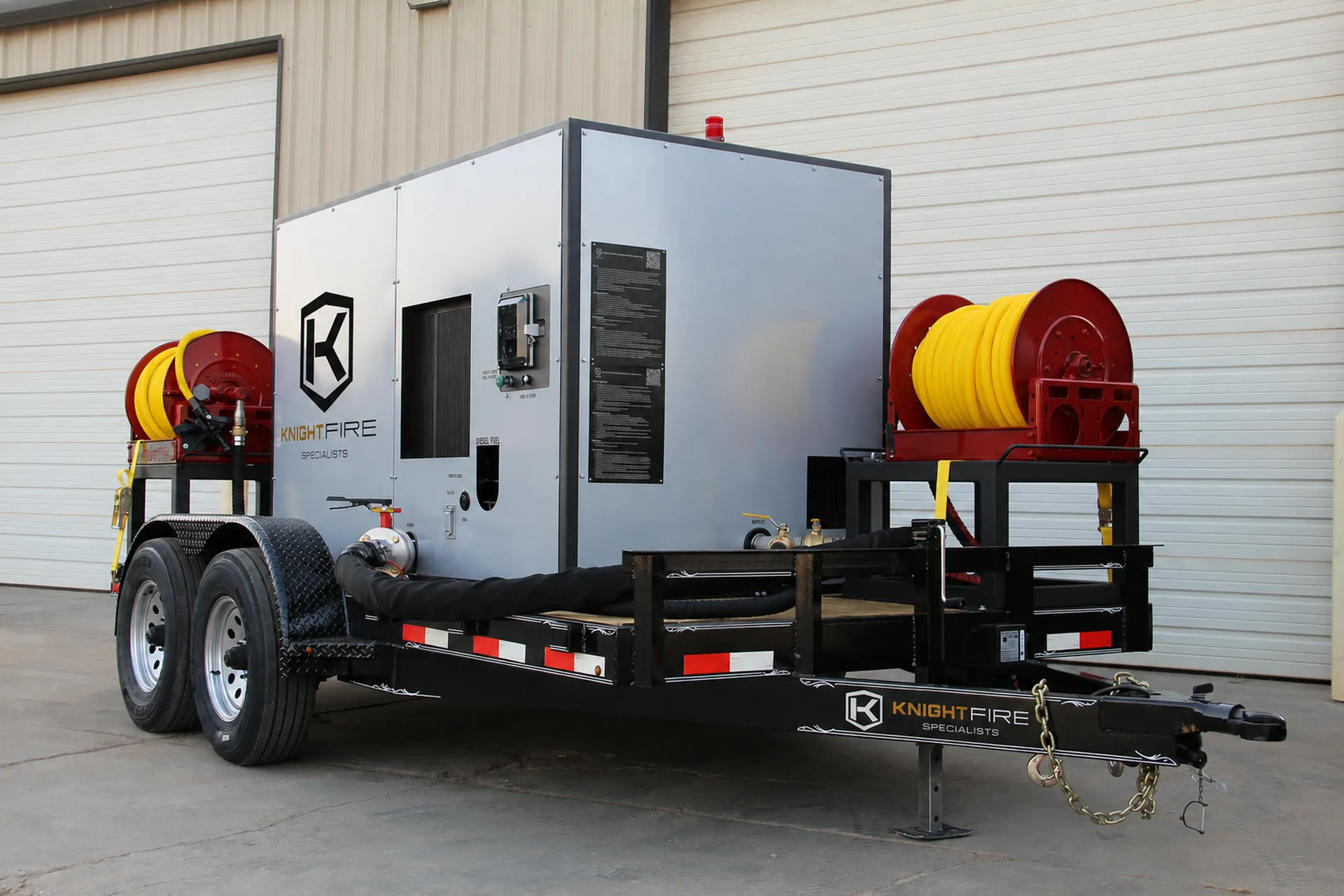
Continuous Compressed Air Foam, or CCAF, takes the concept a step further. A CCAF system can provide a continuous supply of compressed air foam when connected to an appropriate water source. That makes it particularly valuable in applications where longer-duration suppression capability may be needed.
Knight Fire’s OnGuard™ Series uses CCAF technology and is designed for demanding environments ranging from heavy equipment and oil and gas operations to industrial facilities and data centers.
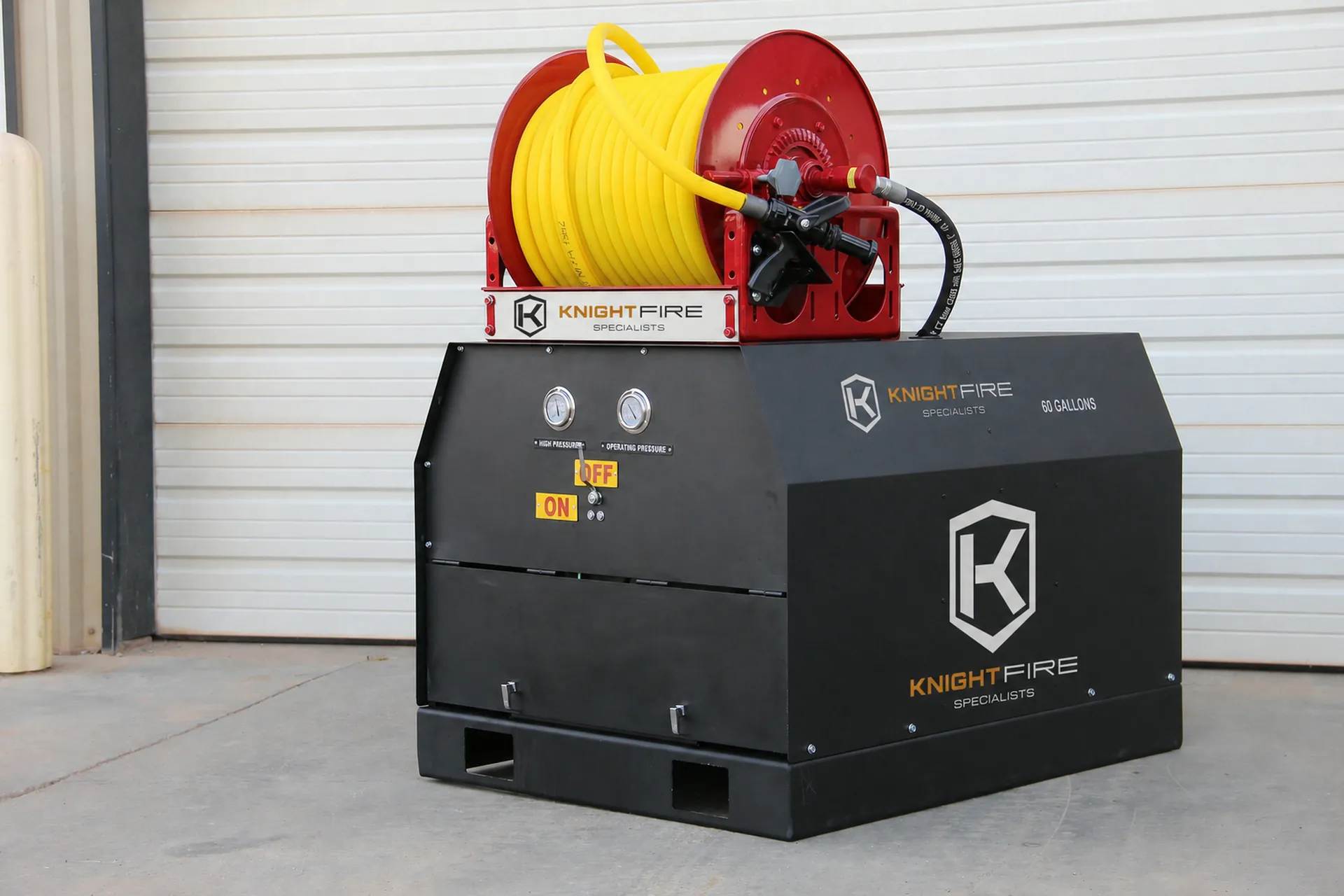
The biggest difference is how the systems are designed to deliver foam.
CAF systems typically operate with a self-contained water supply, making them highly mobile and useful in applications where portability and rapid response are priorities. CCAF systems can be configured to provide longer-duration or continuous suppression when connected to an appropriate water source or stored water supply. They do this by automatically and continuously supplying compressed air while foam is being discharged.
Neither approach is automatically “better.” The right choice depends on the application. That’s an important distinction because fire protection should never begin with a technology. It should begin with understanding the risk.
Compressed air foam can be a strong option when operations need effective coverage, efficient water use, mobility, or suppression capabilities designed around demanding equipment and environments.
Applications can include:
- Heavy equipment
- Oil and gas operations
- Industrial facilities
- Utility operations
- Emergency response
- Forestry
- Remote worksites
- Data centers
The important question isn’t just, “Should we use foam?” It’s, “What are we protecting, what risks does it face, and what system gives us the right protection for that environment?”
At Knight Fire, that’s where every conversation starts. We don’t believe in choosing fire suppression equipment from a catalog and hoping it fits the job. We look at the equipment, operating environment, fire risks, available space, water availability, mobility requirements, and what happens to the operation if that asset is lost. Then we determine what solution makes sense.
Because the best fire suppression technology isn’t necessarily the biggest or most complicated. It’s the one that’s built for the job it needs to do. Protection engineered by people who understand fire.
Frequently Asked Questions
What is a compressed air foam system (CAFS)?
A compressed air foam system combines water, foam concentrate, and compressed air to create finished foam for fire suppression. The foam provides effective coverage while helping make efficient use of the available water supply.
What is the difference between CAF and CCAF?
CAF systems typically use a self-contained water supply, making them useful for mobile fire suppression and rapid response. Continuous Compressed Air Foam (CCAF) systems can provide a continuous supply of foam when connected to an appropriate water source. The right choice depends on the application and operating environment.
Is compressed air foam better than water for fire suppression?
It depends on the fire and application. Compressed air foam can offer advantages such as improved coverage and more efficient water use in appropriate applications, but no single suppression method is right for every fire risk.
Where are compressed air foam systems commonly used?
CAF and CCAF systems can be used in applications including heavy equipment, oil and gas operations, industrial facilities, utilities, forestry, emergency response, and remote worksites. The appropriate system depends on the specific hazards and environment.
How do I know if CAF or CCAF is right for my operation?
Start by evaluating what you’re protecting, the fire hazards present, available water, required mobility, space constraints, and response needs. Knight Fire evaluates the application first and recommends the technology second.